Blue-Green Lights May Signal Driverless Cars
Federal regulators propose a specific cyan hue for robotaxis to alert the public that no human is at the wheel, aiming to end the confusion caused by varying light designs.
By Rebecca Dawson ·
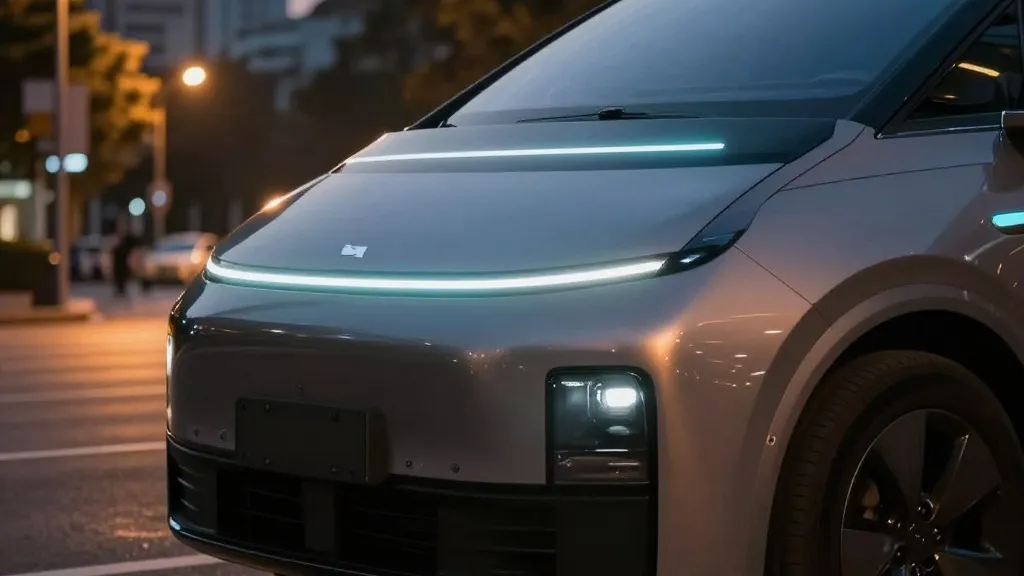
For anyone who has shared a road with an autonomous vehicle, the visual cues can be a source of uncertainty. You might wonder if the car is in self-driving mode or if a human is just taking a break. That ambiguity is about to change. Federal regulators have proposed a specific solution: robotaxis should use cyan-colored marker lamps. This distinct blue-green light would serve as a clear, standardized signal to law enforcement and other drivers that the vehicle is operating autonomously. The goal is simple. When you see that specific shade of blue-green, you know the machine is in control.
The debate over how driverless cars should communicate their status has gone on for years. Various companies have experimented with flashing text displays, audio alerts, and custom lighting patterns. However, the lack of a unified standard has left road users guessing. The National Highway Traffic Safety Administration, or NHTSA, has now stepped in to end the confusion. By rewriting parts of Federal Motor Vehicle Safety Standard No. 108, the agency is establishing a clear federal baseline for how autonomous vehicles should appear to the outside world.
The choice of cyan is not arbitrary. The automotive industry already has a crowded visual language. Red lights indicate braking or reverse. Amber lights signal turns. White lights serve as headlights, and flashing blue or red lights are reserved for emergency vehicles. This leaves a gap in the color spectrum. Cyan, which sits between blue and green, theoretically fills that void without clashing with existing signals. It offers a visual cue that is distinct enough to be recognized quickly but familiar enough not to startle drivers.
There is already some precedent for this kind of lighting. Mercedes-Benz previously received state-level approval to use turquoise lights on its Level 3 Drive Pilot vehicles. While the automaker has since moved away from that specific Level 3 system in favor of a Level 2++ approach, the experiment proved that such colors can work. NHTSA wants to take that concept and make it a national standard. This would allow major operators like Waymo, Nuro, and Zoox, as well as manufacturers like GM and Mercedes, to adopt a uniform look for their autonomous fleets.
Under the proposed rule, these cyan marker lights would remain optional for manufacturers. However, the optionality comes with strict conditions. If a company chooses to include these lights, they must adhere to the new federal standards regarding color, brightness, and placement. This ensures that a driver in Boston sees the same signal as a driver in Los Angeles. It prevents a chaotic mix of slightly different shades or intensities that could lead to misinterpretation on the road.
The proposal also includes significant cuts to outdated requirements that do not apply to human-free designs. Current rules mandate the presence of physical hazard switches, manual beam shifters, and turn levers inside vehicles. NHTSA proposes removing these mandates because they are largely useless in a car with no driver. The agency is also updating the 12.8-volt testing standard. This change would allow automakers to design around modern LED architectures without navigating unnecessary administrative hurdles. Additionally, NHTSA is considering removing rules that dictate the specific vertical positioning of high-beam lights relative to low-beam lights.
This update is part of a broader effort by the Department of Transportation to streamline the deployment of autonomous vehicles. The government aims to make it easier for automakers to build cars that lack traditional controls like steering wheels and pedals. These components are essential for human drivers but are often redundant or purely decorative in fully autonomous designs. By clearing away these regulatory obstacles, the agency hopes to accelerate the integration of robotaxis into the daily traffic flow.
Despite the push for flexibility, regulators are still holding companies accountable to existing rules. Last month, NHTSA opened an audit query into the Tesla Cybercab. The agency is examining the technical data Tesla used to certify the vehicle. The primary concern is the absence of certain design features, such as sideview mirrors, pedals, and a steering wheel. These features are currently required under FMVSS. The audit highlights the tension between modernizing standards and enforcing current rules while new ones are being drafted.
The next steps involve public comment and final rulemaking. Once the process is complete, automakers will have a clear path forward for designing autonomous vehicles. For now, the proposal sets the stage for a more consistent driving experience. As robotaxis become more common in New England and beyond, a standardized light could become as recognizable as the stop sign. It is a small change in color, but it could have a large impact on road safety and public confidence.
Source: The Verge