Brazil Votes in Tight Runoff Between President Lula and Senator Flávio Bolsonaro
Brazilians head to the polls on Sunday in a closely fought presidential runoff in which the leftist incumbent seeks to overturn a first-round defeat to the far-right senator.
By Public Newz Wire Staff ·
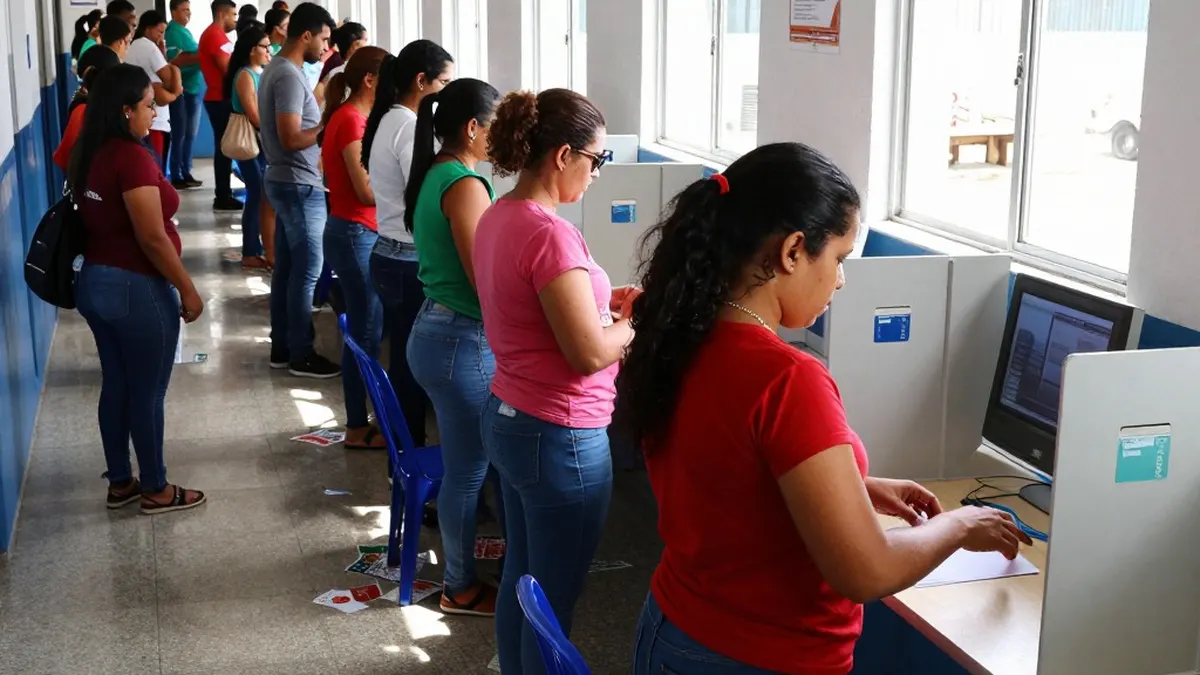
Brazilians are voting on Sunday in a presidential runoff that is among the hardest to predict in the country's recent history. The leftist president, Luiz Inácio Lula da Silva, is trying to stage an unprecedented comeback against the far-right senator Flávio Bolsonaro, who finished first in the opening round.
Bolsonaro's first-round win came as a surprise, since he did not lead most polls, and it made him the favourite three weeks ago. Lula's campaign has since gained ground, and the two candidates now enter the vote virtually tied. The first-round gap was the narrowest ever recorded, at less than 2% of the vote.
Lula, who is 81, has concentrated much of his runoff effort on turnout. Abstention hit a record high in the first round and disproportionately affects his voters. He has also worked to raise fears about what the return of a Bolsonaro family member to power could mean.
Flávio Bolsonaro, 45, has been a congressman for more than 20 years with few bills passed. He is the eldest son of former president Jair Bolsonaro, who is under house arrest serving a 27-year sentence for attempting a coup to overturn his 2022 defeat to Lula. The senator has promised to pardon his father if elected. With an even more conservative congress taking office next year, he has also vowed to "change the constitution and re-democratise this country", a pledge that alarms those who fear he could follow his father's authoritarian path.
Voters described a stark choice. Nuno Rau, a 63-year-old architect and writer, said the two candidates represent "two completely different projects for the country". He said one points toward the end of social rights and of democracy itself, while the other fought for income distribution and free public education. "I may have criticisms of Lula, but there is no way to choose Bolsonaro," he said.
Aparecida Moreira, a 62-year-old lawyer, plans to back Bolsonaro mainly for his "iron fist" security policy, which includes building five "mega-prisons" inspired by those of El Salvador's president Nayib Bukele. She also supports his proposal of chemical castration for rapists. She said a vote for Lula would amount to a vote for the "dictator" Alexandre de Moraes, the justice whom Bolsonaro supporters widely associate with Lula because he oversaw the former president's conviction, even though Lula did not appoint him.
Both candidates drew large crowds to final rallies on Saturday in Rio de Janeiro, São Paulo and Belo Horizonte. With each side's supporters largely fixed, the result is likely to hinge on the small number of voters who identify with neither man. Bolsonaro began the runoff with a lead and the backing of most other defeated candidates, but he stagnated in the polls while Lula gained support.
Analysts attribute the shift partly to a sudden fear among some voters of a Bolsonaro return, and to controversies including two federal police inquiries into the senator over alleged corruption and money laundering. Lula, meanwhile, overhauled his digital strategy and benefited from student-led protests across the country, most of which did not directly involve him. Political scientist Helcimara de Souza Telles said Lula's first-round campaign failed to connect with the public, but that civil society movements have driven his growth since.
A narrow margin is expected in Latin America's largest country, which has 159 million voters. Many analysts believe that if Lula wins, Bolsonaro could refuse to concede, as his father did four years ago, and that Donald Trump, a longstanding ally of the family, could decline to recognise the result. Telles noted that rightwing candidates have won all seven Latin American presidential elections since Trump began his second term, leaving Brazil as one of the few countries in the region still resisting him. In her view, a Bolsonaro victory would mean losing Brazil to a model of autocracy backed by the US.
Source: The Guardian