End-2026: The New Deadline for Tesla Cybercab Customer Deliveries
Tesla has confirmed that private customers will begin receiving autonomous Cybercab units before the close of 2026, although most early units are reserved for the company's own robotaxi fleet.
By Aever Bundji ·
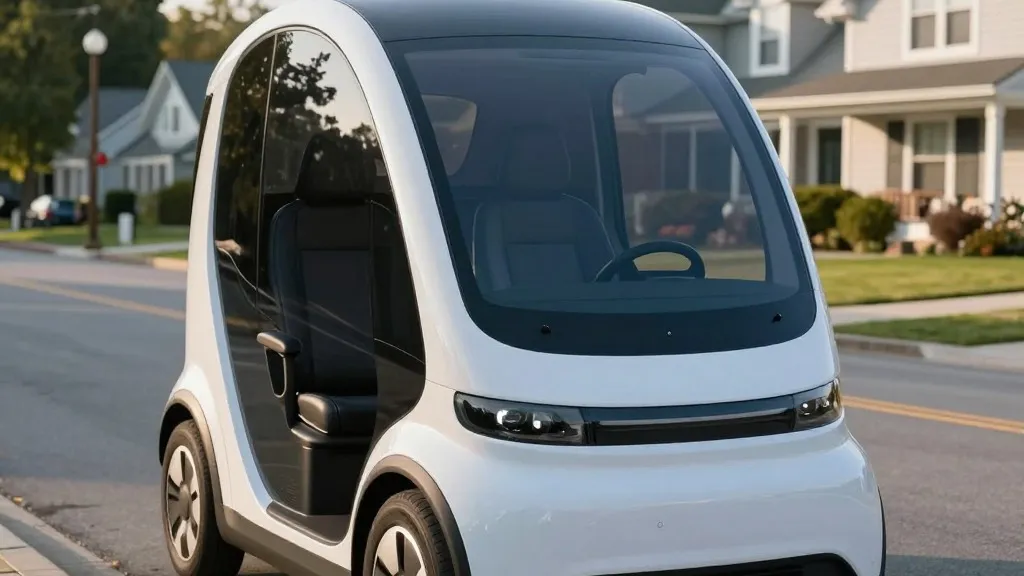
For New England consumers watching the evolution of autonomous transportation, the wait for a definitive purchase window has finally ended. Tesla has established a specific target date for when its purpose-built Cybercab will be available to private buyers. According to statements made during the company’s third-quarter 2026 earnings call, the vehicle is slated to reach customers before the year concludes. This timeline resolves months of uncertainty regarding whether the fully autonomous two-seater would be a near-term retail offering or a long-term fleet asset.
The primary change for ordinary people is the shift from speculative availability to a concrete production schedule. During the call held on October 21, Vice President of Engineering Lars Moravy confirmed that the company is aiming to deliver Cybercabs to customers by the end of 2026. This announcement marks a significant milestone in Tesla’s strategy to integrate self-driving technology into the consumer market, moving beyond internal testing phases toward broader distribution.
A critical distinction remains between the vehicles arriving in private garages and those entering the public road network. Moravy clarified that production is currently active at the Gigafactory Texas. However, he noted that every unit currently coming off the line is being directed toward Tesla’s internal Robotaxi fleet. This means that while the manufacturing process is scaling, the initial wave of vehicles is not yet intended for individual ownership.
As operations expand, the company plans to begin delivering fully designed autonomous vehicles to the public. Moravy described this transition as a gradual process. Tesla intends to start with small batches of customer deliveries to build experience in logistics, ownership models, and fleet management. This cautious approach allows the company to refine how it supports autonomous vehicles that are no longer under its direct operational control.
CEO Elon Musk further contextualized the product strategy by emphasizing the service-oriented nature of the Cybercab. He described the vehicle primarily as a transport-as-a-service offering rather than a personal asset comparable to the Model 3 or Model Y. Musk stated that the vast majority of Cybercab units will remain Tesla-owned, suggesting that private ownership will be a secondary market segment for this specific vehicle model.
The Cybercab itself represents a distinct departure from traditional automotive design. It is a two-seat vehicle that lacks both a steering wheel and pedals, relying entirely on Tesla’s Full Self-Driving suite for operation. Production of the vehicle began in February, and early units were integrated into the Robotaxi service in early September when public rides launched. Tesla previously indicated a target price of approximately $30,000 for these units.
Looking ahead, the broader rollout of unsupervised Full Self-Driving to standard consumer cars is expected in the second quarter of 2027, according to Ashok Elluswamy, Tesla’s Head of AI. While the Cybercab deliveries are set for this year, the wider application of the technology across the existing vehicle lineup remains a future milestone.
Despite the confirmed timeline, some hurdles remain ahead of widespread customer delivery. Early buyers or fleet operators may find that the autonomous operation of their vehicles is geographically restricted. These limitations are largely due to the pace of regulatory agencies, which may lag behind the technical capabilities of the hardware. The coming months will test both the production logistics and the regulatory environment as Tesla moves toward its year-end goal.
Source: Teslarati