Tesla pushes Optimus robot deliveries to late 2027 as hand mechanics remain difficult
The automator admitted that the robot's dexterity and durability need significant improvement before it can be sold to outside companies, a delay that aligns with competitors' schedules.
By Jonathan Pierce ·
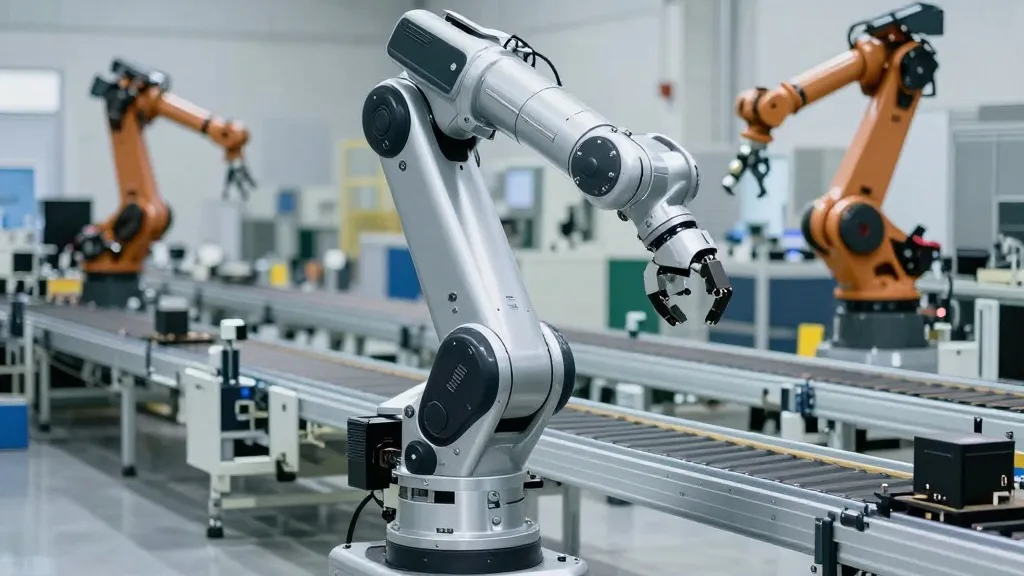
Tesla is now targeting late 2027 for the start of external deliveries of its Optimus humanoid robots. During the Q3 2026 earnings call, Elon Musk stated that the company needs more time to solve persistent issues with the robot's hands, overall durability, and artificial intelligence. This timeline shift marks another adjustment for the project, which has faced repeated delays in previous years.
Musk explained that Tesla has begun early production of the robots on its high-volume line in Fremont, California. This facility previously built the Model S and Model X. While much of the line designed for a million units annually is already installed, reaching that capacity of roughly 20,000 units per week will take at least a year. Parts of the design are still changing, which complicates the ramp-up process. The company plans to start by supplying the robots for industrial jobs that are dangerous, repetitive, or require around-the-clock operation.
The hand remains the most significant hardware challenge. A Tesla engineer noted that custom gears and the hand itself carry reliability concerns. Musk agreed, explaining that the fingers must be soft enough to handle delicate objects yet tough enough to withstand constant wear. Unlike human skin, robot fingers cannot heal, making durability a key engineering hurdle. The company also faces issues with its AI architecture and currently lacks a large fleet of robots to collect real-world data in the same way its cars do for Full Self-Driving.
To address the data gap, Tesla plans to build between 10,000 and 20,000 robots and use them to practice tasks in an internal program called the Optimus Academy. The company also intends to install its AI5 chip in the robots around April 2027. Musk promised a video within a month or two showing the robot performing tasks that are not pre-programmed, aiming to dispel the idea that humanoid demos are merely scripted routines.
This delay follows a pattern of shifting timelines. In 2024, Musk suggested high-volume production for other companies could happen in 2026. By early 2025, he predicted building 10,000 robots that year, with several thousand doing useful work by the end of the year. He later admitted that none had reached that level of utility. Tesla's Q3 shareholder letter now describes the units coming off the Fremont line as the first production-quality bots the company has manufactured, implying earlier models did not meet that standard.
Competitors are also grappling with similar technical hurdles. XPeng activated an automated production line for its IRON robot in Guangzhou in September. Over 80% of core processes are automated, and the robot features 21 degrees of freedom in each hand. XPeng aims for mass production by the end of 2026 and deliveries in the first half of 2027, a timeline very close to Tesla's. The company plans to start with stores and malls before rolling out in Europe later in 2027.
Boston Dynamics has also made progress with its electric Atlas robot. The company began production in January and has committed all its 2026 deployments to customers, including Google DeepMind. In September, it opened a training center at Hyundai's Metaplant in Georgia, where Atlas is learning to sequence car parts. Hyundai plans to deploy 25,000 robots across its plants in the coming years. Boston Dynamics took a pragmatic approach to the hand problem by prioritizing sturdy grippers over human-like dexterity, a strategy that sidesteps some of the difficulties Tesla faces.
Musk asserted that no one else is close to Tesla in developing a general-purpose humanoid. However, the pace of competitors suggests a tight race. While Tesla may have built the most robots, the focus is now on making them useful and reliable for real-world work. Investors and observers will watch closely to see if the late 2027 target holds or if the timeline slips again.
Source: Electrek