Tesla Robots Begin Mass Production Run
Tesla has launched high-volume manufacturing of its Optimus humanoid robots at the Fremont factory, marking a shift from prototype to commercial product.
By Jayden Sweiler ·
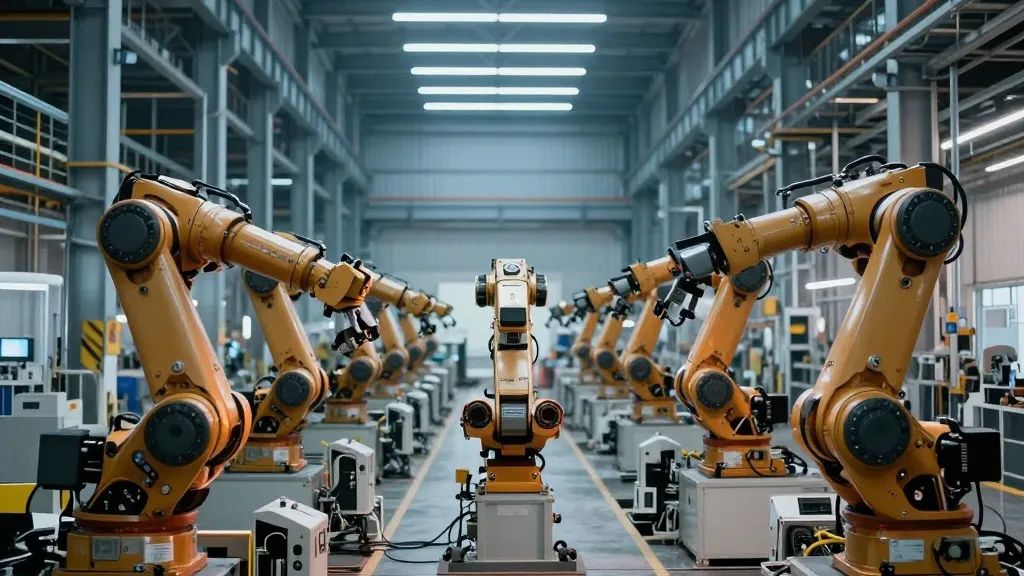
Tesla has long promised that its humanoid robot would transform the labor market, but the company has only just now moved the project from the laboratory to the assembly line.
In a significant announcement accompanying its third-quarter shareholder letter, Tesla confirmed that it has begun building Optimus units on a dedicated high-volume production line inside its Fremont, California, factory. The company stated that the units rolling off this specific line are the first to meet the rigorous standards of a true production-quality product, moving beyond the experimental phase that has defined the project for years.
The transition was not without logistical hurdles. The space currently housing the robot line previously built the Model S and Model X sedans and SUVs. Tesla executed a rapid clearance of the old vehicle equipment in just 46 days to make room for the new infrastructure. The facility is now configured to support a massive annual capacity of one million units, a figure that signals Tesla’s intent to treat the robot not as a niche product, but as a core component of its future business model.
During Wednesday’s earnings call, CEO Elon Musk provided a detailed roadmap for the upcoming production ramp. He noted that while the initial growth curve will be shallow, the trajectory follows a classic S-curve model. Musk expects the team to finalize the robot’s artificial intelligence, electromechanical design, and reliability metrics by the end of next year. Once these refinements are complete, Tesla plans to begin delivering Optimus units to external companies for roles that are dangerous, repetitive, and require around-the-clock operation.
A critical challenge for the program is how the robots learn. Unlike Tesla’s automotive fleet, which sends millions of data points back to the company’s AI team daily, Optimus does not yet have a massive installed base to generate training data. To solve this, Tesla is implementing a concept it calls the Optimus Academy. This initiative involves deploying 10,000 to 20,000 robots to practice a wide array of tasks. The data generated by these internal units will be used to train and improve the next generation of the AI model, creating a self-improving loop where every unit off the line contributes to the collective intelligence of the fleet.
Hardware upgrades are also on the horizon to support this learning process. Tesla intends to integrate its AI5 chip into Optimus units starting next year. Musk indicated that a new video demonstration is expected within the next one or two months, showcasing the robot completing tasks driven by AI rather than preprogrammed motions. He specifically contrasted this approach with rival humanoid demos that rely on scripted routines, arguing that such methods would not withstand the complexities of real-world environments.
The supply chain is already aligning to support the scale-up of production. In September, Tesla certified three key partners, Tuopu, Joyson, and Sanhua, for the mass production of critical Optimus components. Furthermore, construction is underway on a much larger dedicated facility at Giga Texas. Recent drone footage shows the steel frame of the plant nearing completion, with Musk citing a long-term target of 10 million robots per year for that location.
Despite the optimistic timeline, engineering challenges remain. Executives noted that production costs are trending toward the expected manufacturing cost of the Cybercab, suggesting the robot is being engineered for volume efficiency from the start. However, the robot’s hands remain the most difficult component to perfect. This area has been a focal point of recent engineering efforts, as highlighted by Musk during the X Takeover event earlier this month. As the line ramps toward a goal of roughly 20,000 robots per week, the success of the Optimus Academy will determine whether Tesla can turn its ambitious timeline into a commercial reality.
Source: Teslarati